
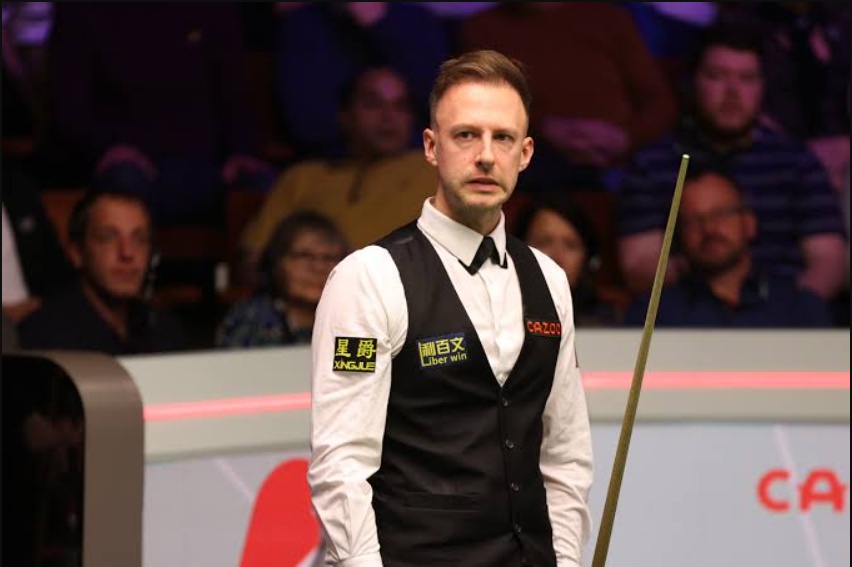
Judd Trump you notice it first in how the frame stops feeling like a contest and starts feeling like timing. Not bad. Just brief. Trump takes a half-chance and turns it into a full clearance attempt like the table owes him space.
The opponent sits back, already recalculating safety exchanges that no longer exist.
And South Asian fans watching this pattern on screens in Lahore, Karachi, Dhaka, Delhi know this rhythm too well now. A break builds. Then another. Then a match that once looked tight starts bending in one direction without asking permission.
This season placed Trump in that familiar position again, the one where rankings and pressure and expectation start circling him instead of chasing him. He carried the World No. 1 tag into tournaments where players usually slow down and protect leads. He did not slow down. He pushed. That push changed frames before opponents even settled into their chairs.
typical exchange
A typical exchange against him looks like a safety battle for five minutes, then a single loose cue ball, then trouble. Then recovery becomes theory. His long pot success forces defenders into thinner margins, and those margins break early in matches rather than late. That matters more than highlight reels suggest. Because snooker does not reward flash. It punishes hesitation.
There is a misconception that his style lives only on aggression, as if it ignores the tactical spine of the game. But watch closely and that argument starts to slip. He plays safety when required, just not as a resting state. He treats it like a temporary contract. Once the opening appears, even slightly open, he steps through it fast enough that the table does not reset in time.
South Asian viewers
South Asian viewers pick up on this quickly because they already understand rhythm sports. Cricket trained that eye. A batter waiting for length. A bowler searching for error. The same patience applies here, just compressed into a table-sized battlefield. When Trump finds angle after angle, it feels like a batting innings where every gap in the field stays open for one ball too long.
There were stretches this season where he compiled century breaks in clusters that forced commentators into repetition, but numbers alone do not capture the pressure shift. A run of heavy scoring does something quieter. It removes belief from the other side of the table frame by frame. By the time a session ends, the scoreboard looks less like competition and more like distance measurement.
But then comes the counterargument, always. People point to moments where control slips, where safety exchanges become messy, where a match tightens again after he fails to close early.
criticism holds shape on paper
That criticism holds shape on paper. It does. He does not always suffocate matches the way more conservative champions once did. Sometimes he opens a door back into the contest.
Yet even that critique misses the cost he forces on opponents. They know they must play near perfect snooker for extended stretches just to stay level. One loose safety. One missed angle. That is enough. And against him, enough arrives earlier than expected.
His cue action does not look like force. It looks like certainty trying to avoid hesitation. The cue ball never wanders far unless it is planned. Positioning feels almost pre-decided, as if he sees two shots ahead and accepts only one path through them. And when that clarity arrives early in a frame, the rest of it becomes routine dismantling.
South Asian fans do not just watch him for dominance. They watch for possibility. There is a reason clips of his long pots circulate in WhatsApp groups and late-night highlight reels. Because they carry a kind of permission. That shot is not supposed to go in. Then it does. And suddenly the frame is alive in a different way.
There are matches where safety play drags the tempo down, where opponents try to trap him into long defensive exchanges. He answers by waiting just long enough to show he will not panic. Then one mistake appears. Not forced. Just found. He does not celebrate it. He simply moves on, and the break starts without announcement.
overconfidence in angle selection
And still, the season never stays clean. There are frames he leaves on the table, misses that come from overconfidence in angle selection, moments where the cue ball drifts half an inch too far and changes everything. Those moments do not define him, but they explain why matches against him rarely feel finished until the final black disappears.
What separates him this year from the chasing pack is not just scoring volume but timing inside frames. He chooses when to accelerate. That choice removes rhythm from opponents who rely on slow accumulation. They find themselves playing reactive snooker for long periods, and reactive snooker burns energy without visible damage until it suddenly does.
In South Asia, that contrast feels familiar too. The aggressive player against the grinder. The one who takes chances early versus the one who waits for structure. Trump sits closer to the first category, but with enough control to avoid collapse. That blend keeps him at the top even when criticism circles.
A frame late in the season says more than any table of results. He trails, scrappy safety exchange, nothing clean.
He does not rush
Then a long red from distance, thin contact, perfect angle into the pack. The table opens like it has been unlocked. He does not rush. He builds. Break climbs past fifty, then a century line passes quietly, no celebration, just chalk dust on his fingers and another rack already forming in his mind.
The opponent knows what has happened even before the score updates. That is the quiet part. Not the potting. The recognition. Because once that rhythm settles, recovery becomes unlikely.
And yet, even with World No. 1 beside his name, he plays like someone still trying to prove the table can be broken faster than it resets. That tension never leaves his game. It leaks into every frame. Fans see it and keep watching, even at odd hours across Pakistan and India when matches run late and silence sits outside the room.
First you notice that the frame starts to feel more like timing than a contest. Not too bad. A little bit. Trump takes a risk and treats the table as if it owes him space, turning it into a full clearance effort. The opponent leans back as they re-calculate safety exchanges that no longer exist.
And South Asian viewers of this pattern on TVs in Delhi, Dhaka, Karachi and Lahore all know this beat only too well. A break occurs. Then another. Then without permission a match that looks to be close starts to bend one way.
His style is seen as only aggressive, missing the tactical heart of the game. But if you look really carefully, that logic starts to fall apart. He plays safe when he has to, but not when he’s comfortable. He is like a short term thing. As soon as the opening is there, even if it’s only partially open, he goes through it so fast that the table doesn’t reset itself.
South Asian audiences recognize this immediately as they are acquainted with rhythm sports. That eye, learned from cricket. Batter waits for length. A bowler searching for a mistake. It’s a table-sized battleground, but it still requires the same patience. It is like a batting innings where every gap in the field stays open for one ball too many as Trump finds angle after angle.
There were times this season when he piled up century breaks in bunches that made bystanders do double takes, but the numbers do not tell the whole story about the shift in pressure. Heavy scoring runs have a less marked effect. It extracts belief from the other side of the table, frame by frame. At the end of a session the scoreboard more resembles a distance measurement than a competitiveness.
counter-argument.
But there is always a counter-argument. You’ll hear people cite instances where he lost his cool, safety exchanges went awry or a match tightened up again after failing to close it out early. Such criticism takes shape on paper. And yes, it does. He doesn’t always dominate games like more traditional champions. Sometimes he reopens the competition.
But even that criticism ignores the price he puts on opponents. They know they have to play near perfect snooker for long stretches of time in order to be competitive. One safety is out. One point of view died. That’s enough. And he has opposition enough that comes earlier than expected.
He does not seem to be using force in his cue action. It looks like certainty trying to dodge hesitancy. The cue ball doesn’t travel very far unless it’s pre-arranged. He appears to be almost in position as if he sees two shots in front of him and chooses to take only one of them. Also, when that clarity happens early, the rest of a frame becomes routine takedown.
South Asian fans
South Asian fans support him for more than his dominance. They look for potentiality. There’s a reason clips of his long pots are popular in late-night highlight reels and WhatsApp groups, because they have been authorized in some way. It’s not supposed to go in. And then it does. Then the frame suddenly comes to life in a different way.
In some games the opponents try to trap him in long defensive exchanges and that slows the game down. In answer he waits long enough to prove he will not break down. And then one mistake appears. Not pressured. just found out . He doesn’t celebrate it, He just continues on, and there’s no notification when the break starts.
But the season is never quite that neat. Sometimes he leaves frames on the table. He has made mistakes being overconfident in his choice of angles. Sometimes the cue ball goes half an inch too far and it changes the whole game. Those moments might not define him but they do explain why games against him never feel over until the last black disappears.
scoring numbers
His scoring numbers are what set him apart from the chasing pack, but it’s his timing inside frames this year. He decides when to switch on the speed. Such decision costs rhythm to opponents relying on a slow build-up. They spend a lot of time playing reactive snooker, which expends energy without doing any damage until it does.
The disparity is also seen in South Asia. The grinder and the hard-core gamer. early risk-taking vs. waiting for structure. Trump is closer to the first group, but he still has enough power to stop it all from falling apart. That combination keeps him at the top, even in the face of criticism.
More than any table of results, a late-season frame will tell you. “Nothing is clean,” he trails. The safety swap is gunky. Then a long thin red contact and a perfect angle into the pack from a distance. When it opens it seems to have been unlocked. He takes his time. He constructs . Break, over fifty, and the century line passes silently, no festivities, the dust of chalk on his fingertips, another rack beginning to build in his head.
opponent
The opponent knows what has happened before the score is even updated. That’s the soft part. It’s not the potting. the recognition. Once that rhythm is established, recovery is unlikely.
He has the World No. 1 next to his name but plays like he is still trying to prove that the table can be broken faster than it can be reset. He always plays tight. It bleeds into every frame. And even if it is odd hours in Pakistan and India, when matches go on late and it’s quiet outside the room, fans see it and go on watching.