
Snooker Became Popular this is not the place for the World Championship. But you can feel the tension.
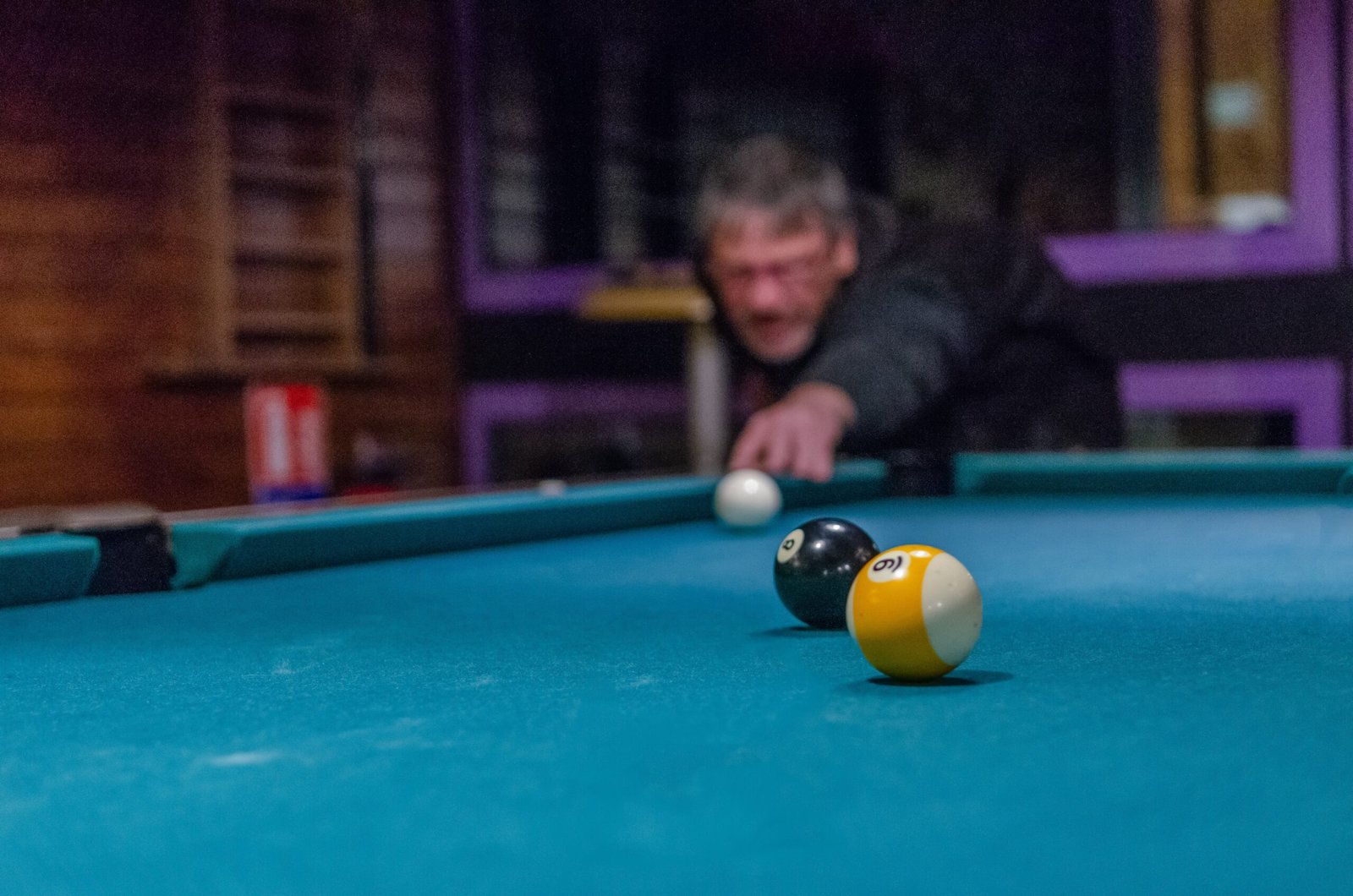
The shot is off. A gentle roll, nothing flashy. Just stay in control. Also, the small group of people lean forward as if the language on the table has changed.
No federation study could ever quite explain the rise of snooker in South Asia like that scene, copied in different versions all over Karachi, Kolkata and Dhaka. Not the first silverware. Not on the broadcasts. The rooms came first.
But when circumstances break, habits multiply.
The first big expansion in India was club culture in Kolkata and Mumbai, where pool tables were hidden behind wood doors that younger players weren’t allowed to touch. However, they got in touch with them. So they began to hang around longer than they were supposed to. Then they began to outplay the more experienced players. A silent handoff of control, one frame at a time.
The army clubs and gymkhanas in Karachi were the first incubators in Pakistan. And the cue sport was good for regimented environments that valued discipline and allowed for quiet hours. Dhaka, Bangladesh had clubs at that pace, but they were cramped and packed. Players had to wait hours to play a few frames before the game ended.
That was not a romantic breakthrough. That helped. The room was full of television.
In the late 1990s and early 2000s, snooker’s social address changed as broadcasts began to enter South Asian homes. Suddenly, the control of Stephen Hendry and the speed of Ronnie O’Sullivan were not locked in on UK club circuits.
Snooker As an Everyday Sports
It played in living rooms that already had cricket. But there was something about snooker that set it apart. It did not have to be moving all the time. Patience had paid off. Except for power cuts and monsoon delays, which kept pace with the cadence of places where long evenings were already a thing.
Increased access led to a rapid growth in amateur and IBSF competition in Pakistan. Muhammad Yousuf’s triumph at the 1994 IBSF World Championship was not an exception in the world of cue sports, it was something seen as validation in South Asia.
The parallel track in India was headed by Pankaj Advani, whose cue sports range combined snooker, pool and pressure into one uninterrupted stretch of control. With multiple IBSF world titles and gold medals at the 2006 and 2010 Asian Games, he was more than a champion. His victories were studied not only by younger players. They watched him pacing. How he combated anarchy. How he turned a safety play into attack.
The clubs then underwent yet another transformation.
By the mid-2000s, commercial billiards halls that combined paid coaching with amateur play began to spring up in Pakistani cities and Indian metropolitan areas, and with them, snooker academies. Tables began to get more uniform. Lighting was clearly and erratically improved. A generation who had only seen frames on TV, mimicked pre-shot routines, chalk habits and even the slow walk around the table in between shots in real time. Some of it seemed puffy. Some of that worked.
snooker developed in South Asia
People often assume that snooker developed in South Asia as a result of the imitation of British players. That does not include the adaption layer. Local players had a different effect on aggression. In Karachi clubs the safety fights tended to last longer than Sheffield’s televised frames. Kolkata attacking players learned the art of survival in situations when humidity could change the table roll in the middle of a frame.
reds
The last two reds are based on match scores that don’t sound glamorous but carry weight: 62-48, 71-65, and 34-59. Ugly finishing. Narrow margins. frames that don’t split cleanly
The dominance of cricket is always in the background of this story, like a rival broadcast signal. There are those who say snooker was a niche sport in South Asia, surviving on clubs and niche broadcast slots, never able to break out of the shadow of cricket.
That reasoning, however, misses the point that many national level cueists began their athletic careers at tables near cricket nets and how many switched because they valued control over chaos and accuracy over field area. The sports were more of an options-sifting than a competition.
ACBS structures
Then came the rise of the Asian circuit under ACBS structures, when Bangladesh, India and Pakistan started playing each other more regularly in organised tournaments. The rivalry didn’t explode. It expanded. Frame by frame. This was a 5-4 decision. There was a 6–3 defeat. Enough variation to keep pressure on and enough repetition to breed familiarity.
One Karachi final saw a player come back from 0-3 to win 5-4 by not just relying on skill, but refusing to give up careless safety exchanges. The crowd didn’t go wild. It exhaled. In this snooker culture the distinction matters. The celebrations are often later, when the final ball confirms reality.