
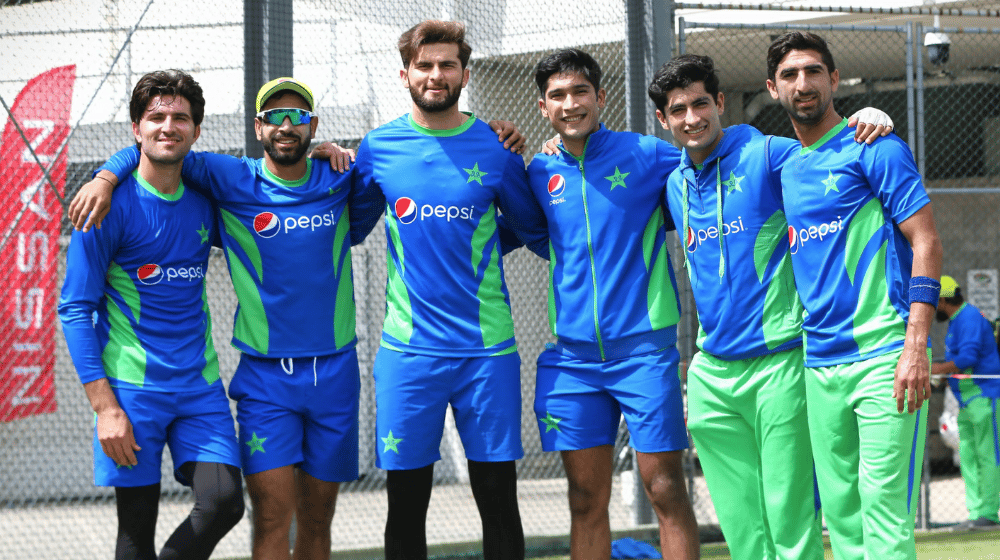
Best Pakistani Bowlers Shaheen Afridi does a brilliant job. Batter thinks it is too full. The ball then swings late instead of drifting leisurely and it makes a forceful correction and the edge appears before the stroke has fully formed. That’s what happens when rhythm gets hold of him. You don’t behave like him. You survive him.
Naseem Shah
Naseem Shah, for example, bowls as if he has planned the batsman’s footwork. A slight pause at the top of his windup, then a release that seems quicker than the speed gun can register. He doesn’t have to move like he’s doing anything. All he needs is the heavy ball length that turns drives into inside edges and inside edges into trouble – accuracy at an uncomfortable pace.
Short spurts of Naseem Shah have already shown what happens when upper orders try to settle within. After a few overs the batsman starts looking at his gloves more than the field. Not worried. I’m just getting used to it.
Haris Rauf
Everything speeds up when Haris Rauf is there. Shaheen asks technical questions. “Naseem asks when.” Haris asks a simpler question. Can you react quickly enough to get out of the way of the next ball?
The ball shoots out of Haris Rauf’s hand as he charges in, chest-first, like it’s late for something. He even runs to set hitters. Best pakistani bowlers A cover drive is cut into the ground, a pull shot comes in half a second early, and dots that feel heavier than runs suddenly appear on the scoreboard.
You might also say he sometimes lets runs leak out. He does. But clean narratives don’t matter at World Cups. They are all about breaking partnerships in two overs spells. That is where Haris lives.
But the big change for Pakistan is when the attack is variation layered on aggression, rather than just pace. That perspective is given by Abrar Ahmed. A release that is critical, not just spin. Then a wrist spin that doesn’t beg for attention. Just surface and patience.
Abrar Ahmed
“When Abrar Ahmed bowls, he looks like he’s asking the batsman to think too much. So do they. The second ball breaks late, the third ball breaks enough to make you miss your footing and the first ball goes straight. You cannot beat him easily. You misread him once, and twice. And suddenly the required rate is up without anyone noticing.
That’s when the best batting lineups start to fail. not breaking up. Tentatively.
Shadab Khan plays a different role and it is easy to mistake him for containment. There are about five balls in that reading. The batter trying to rotate strike ends up defending again, pulling one back a little quicker and drifting another into the pads.
Shadab Khan
Shadab Khan’s control is slow-motion pressure. He doesn need a drastic change In the field he needs angles and enough brains to make singles look dangerous. He also bowls in the middle overs, when World Cups are usually won in silence and no one notices until the scorecard seems to have stopped moving.
Some will argue that the attack still relies on pace, and spin is less relevant in high-pressure situations outside Asia. You make a good point. However, modern ODI cricket is no longer confined to one climate. It is in motion. This group also travels more efficiently than most.
Then there’s the addition of Mohammad Wasim Jr, who is always there in big matches but rarely the one in the spotlight. It’s a hard length and keeps hitters confused for a long time, so they have to make tough decisions neither forward nor back.
Mohammad Wasim Jr.
Mohammad Wasim Jr. doesn’t need the ball to do his magic. He has only to act honestly and promptly. Also, he is more difficult to line up than his reputation suggests when the field stretches in the last 10 overs.
Great batting line-ups are usually rhythm based. One batter settles. Then the next. The innings goes on. Unbroken. Pakistan’s attack breaks this continuity. Losing a wicket in the powerplay is obvious damage. A dot-ball sequence in the 23rd over, while less damaging, has a bigger impact on the outcome — as post-match analysis reveals.
There will be resistance too. Because good batting sides don’t just fold when the heat goes up. They evolve. They aim at Haris when he overpitches, attempt to ride Naseem’s pace with soft hands and cross Shaheen early. They have seen attacks like these before.
You can almost see it in their feet. minor changes. and then decreased. Then none.
Pakistan’s 2027 strike won’t need perfect conditions. Alignment required. The rest is about stress tolerance rather than opposition skill when Shaheen finds rhythm, Naseem finds length and Haris finds tempo. When each scoring opportunity is defended by a different type of threat, even strong batting line-ups struggle.
But it is fundamentally unpredictable. Shaheen can roam. Naseem does tend to overpitch a little. Haris might lose his line and length for an over trying to get a wicket. That volatility is trapped in the same structure that makes them dangerous. Not a flaw that disappears. A little bit of stress.