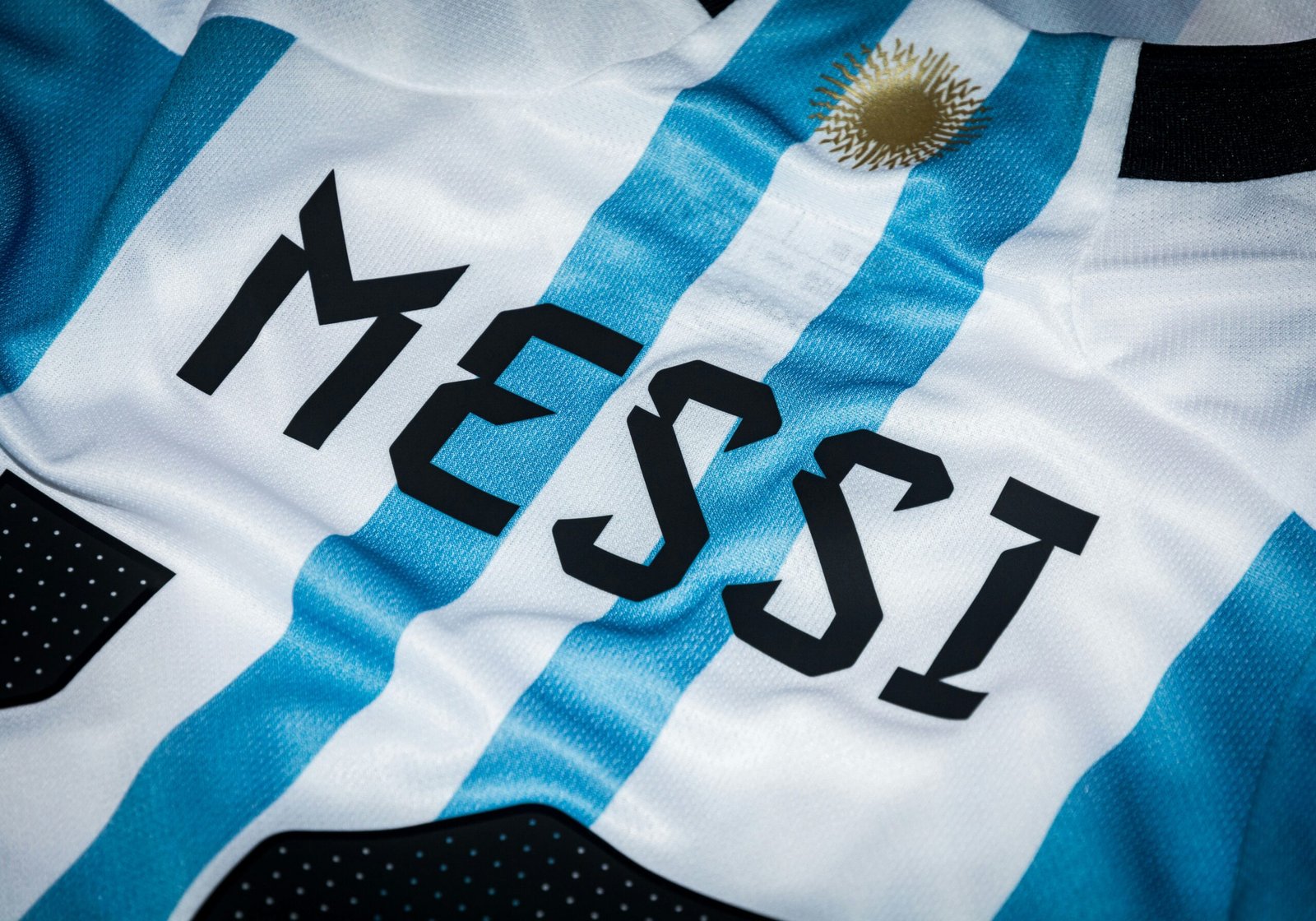
A few blocks away in Dhaka
Lionel Messi’s Legacy a few blocks away in Dhaka, a few young guys went off so loud that someone yelled at them from a window after he scored against Mexico on a low shot through people. Not too shabby. A little bit. And it went on, even after the moment had passed.
Football allegiances in South Asia predated Qatar 2022. Some picked players and stayed there, others were drawn to Real Madrid, Barcelona or Manchester United. But Messi never really needed the club to be aligned in this regard.
System fit and tactical discipline were hardly topics of conversation in tea stalls, even in his PSG days, when he finished with around 32 goals and 35 assists in 75 games in all competitions. It stayed easier. Did he keep doing it? Was he still dodging defenders like they were a half-second behind?
PSG’s Raise To Fame:
In Europe it was more difficult for PSG. It didn’t really make things more difficult here. The collective machine around him looked uneven, people saw the same touches and reached the same conclusion. In some nights in Paris he was behind Neymar and Mbappé, and it was almost as if he was a playmaker and without a word, the game would change. In Faisalabad you could feel the cadence shift even through buffered streams.
Then there was the ever-present counterargument: consistency across leagues is more important than a perfect World Cup, and club football defines legacy more than international competitions. It makes sense in a debate chamber. But South Asia does not see Messi as a theory. It watches him again and again. Same movement, different level, same result most of the time.
But this time the reaction in South Asia was different. Less silent watching. Share more. Video clips were shared across WhatsApp groups, often off the screen, sometimes with comments spliced in the middle. Whenever there was any doubt someone would post a caption as if he was still there.
Making Its way To A Popular Sport
Where cricket is popular, comparisons are inevitable. Players are compared to cricket players – even when that doesn’t make any tactical sense. Messi, though, sidesteps that trap because he doesn’t rely on volume like bowlers and batters. He compresses moments. One turn in midfield, one shot over a keeper out of reach, one pass through the lines. Then silence once more.
A boy in Dhaka once tried to explain it to me over a phone call that kept breaking. Messi doesn’t look like he’s moving fast and everybody else looks like they’re moving wrong,” he said. The sentence was messy, and truncated, but the notion stuck.
And South Asia knows the concept of scarcity all too well. Football heroes don’t come to this part of the world too often. So it’s not just a club rivalry, or even a national boundary, when one player becomes a constant over two decades, from teenage Barcelona highlights on early YouTube to World Cup finals in Qatar. It becomes your personal memory bank. You remember where you saw his goals easier than you remember the goals.
Barcelona’s Legacy
The years in Barcelona are still a kind of bottom layer. Depending on where you see the history, there were six Ballon d’Ors in 2019, then seven, then eight, although the figures seem almost meaningless today. It’s the period of time he played in close quarters between Busquets and Iniesta that matters more, taking false nine roles and finishing seasons with ridiculous goal totals.
50 goals in a season in La Liga. 73 in every competition for another year
50 goals in a season in La Liga. 73 in every competition for another year. The statistics, however, never explain why defenders retreated half a step ahead of schedule.
Criticism didn’t really stick here, either. On European panels, the same games were often watched by South Asian supporters and different things were perceived when PSG’s performances were considered inconsistent and Champions League exits were discussed. A player still riggs games. Just in different ways. This may be selective watching, but without it football fans rarely survive.
Then something changed again. The audience, not Messi. There was less pressure. There was relief at no longer waiting for approval, but fans were still watching, cutting goals and arguing about excellence. It is already here.
He’s at a different speed now that he’s at Inter Miami. not exactly slower. more under control.
Late night time slots in South Asia continue to air replays.
Because it’s not even really a factor where he plays anymore. It’s knowing that when the ball gets to him in a certain part of the field, something’s going to happen.