
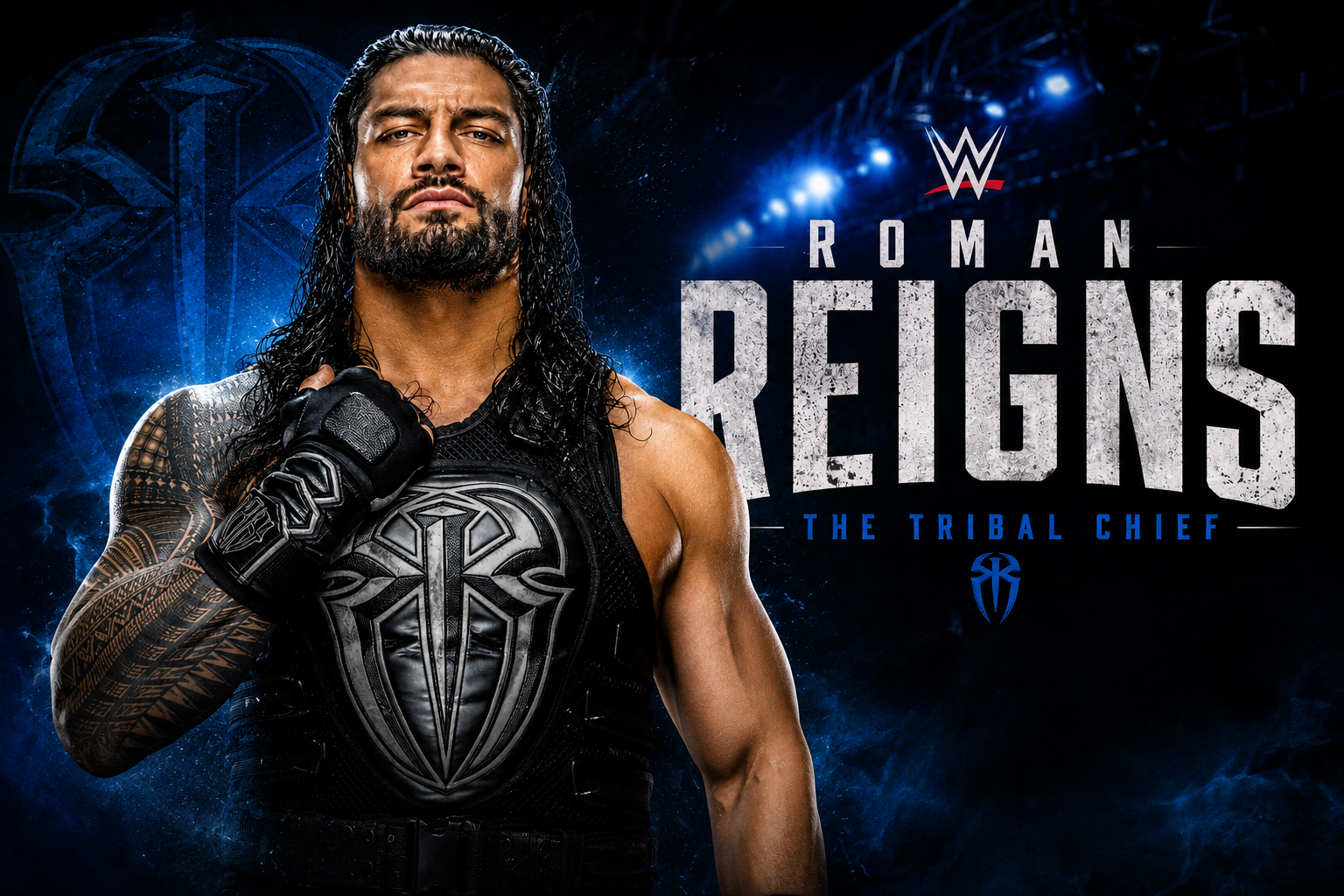
When the arena lights go out
When the arena lights go out, it is the sound, not the images, that changes first. Roman Reigns comes out slow, almost methodical, as if he already knows the ending to the bout that’s somewhere in the future. A low pulse can be heard from the speakers. The finger points upward. Then sideways. The journey continues. No rush. No wasted movement.
See how little he says about that. He doesn’t really exist here anymore as the happy underdog he once was. Too many two-losses and shoulder-ups and suddenly the “Big Dog” persona was history. It was replaced by something taller, but not faster.
Roman Reigns As The head of the table
The chief of the tribe. The head of the table. It hits differently when he stops at the edge of the ramp and lets the camera take in the gold around his waist. He unified the 2 belts by beating Brock Lesnar in a match that turned the whole company upside down at WrestleMania 38.
That game didn’t have the feel of a contest. That’s what it felt like. Consolidating. Lesnar’s five or six big bursts of offense, usually the type to end nights, included slamming, hoisting and trying to break rhythm early.
Roman took it, slowed it, delayed it and eventually slowed everything down. Lesnar’s appearance went from predator to someone stuck in time. That’s the issue. He can control tempo more than he can space now.
On October 2023, the Universal Championship reign ended after 1316 days.
He stacked numbers in a way the WWE seldom allows these days. On October 2023, the Universal Championship reign ended after 1316 days. At the time, Cena’s late-era challenge, Edge’s last major chase and various Brock Lesnar incarnations attempted to alter the same result. 30+ successful defenses, depending on how you count the multi-man games.
As the story itself becomes repetition, the precise number starts to get fuzzy. He wins. Period. Then he wins again.” And again. And again.
But the Bloodline is more than just champions. It creates a hierarchy that is almost familial in a way South Asian audiences will instantly relate to. Not a soft bunch. ruled the family. Jey Uso was the first to crack, fight back, and was ultimately folded back in after ritualistic, not narrative, cycles of punishment and reconciliation. Jimmy’s behind.
Then Solo Sikoa appeared like a quiet cure for the mayhem
Then Solo Sikoa appeared like a quiet cure for the mayhem. Sami Zayn came in, and for a moment, he broke the entire system—not as an outcast, but as someone who’d accidentally learned the language of belonging before being cast out again.
Track that story and you can see why fans in Bangladesh, India and Pakistan are so captivated. The idea of authority in families, the weight of obedience, and the slow blooming of rebellion that never fully bursts out. Roman is in the thick of it, not always boisterous, never agitated. Just show up. Also, when he speaks his words seem more like verdicts than promotions.
Now he’s always got a counter-argument with him. that the long reign had protected him from real uncertainty and the booking, protected him too much. It makes sense until you see fights like the one with Cody Rhodes at WrestleMania 39. Cody is coming in with a lot of momentum with the crowd behind him and the offense starting early.
They call it “overbooking.”
Cross Rhodes lands near the fall, tension builds. Next comes interference. Then there is counter-interference: When the last bell rings, Roman is alive again, not neatly, but still standing, as the rhythm breaks into pieces. They call it overbooking. Possibly. But Roman still has to stay in the ring as the crowd turns against him, changing the perception of authority in the moment.
At this rate, the Shield version of him would be unrecognizable. That older Roman believed in athleticism, sprinted into the space and took chances that either quickly succeeded or failed. This version eliminates risk by eliminating tempo. That almost seems unfair, but not in a simple way. It’s like a system that adapts itself during the game.
Founding That Structure:
Founding That Structure: At SummerSlam 2021, Cena drove Roman into one of his more polished survival efforts trying to shatter that structure. Roman’s game is one of control, rather than chaos, with kickouts at crucial times and changes made during the game. The pinfall isn’t called. It sets in.
There are times Roman loses control a little, like when he wrestles Logan Paul, who is athletically unpredictable and forces him to react for long stretches. The game is weird, but he adjusts. More spontaneity, less script. This difference is important because it shows where the ceiling of control lies.
There are tricky rhythmic breakdowns in a sequence
But the aura isn’t perfect. Some matches are longer than they need to be. There are tricky rhythmic breakdowns in a sequence, occasional spear timing mistakes, and pauses that are half a second too long before a cover. little things. Not enough to disrupt structure, but enough to tell you that control needs adjusting too.
But then the Bloodline Civil War comes along, and things change again. Sami Zayn, in the middle of Roman’s world, is accepted for a moment and the emotional temperature of the group shifts.
Repetition develops its own mentality.
The story depends too much on intervention and faction protection, say critics. On paper that argument looks convincing. But Roman keeps up with the times in the ring so well that the opponent is forced to react slowly. It’s no longer a surprise to have a spear. It comes as an inevitability. And opponents cannot still resist. Repetition develops its own mentality.